
Trading
This comprehensive guide explores crypto trading, equipping general readers with foundational knowledge, diverse strategies, and crucial risk management techniques for success in volatile digital asset markets. It covers everything from basic concepts and types of trading to in-depth analysis methods, platform selection, and common pitfalls to avoid.
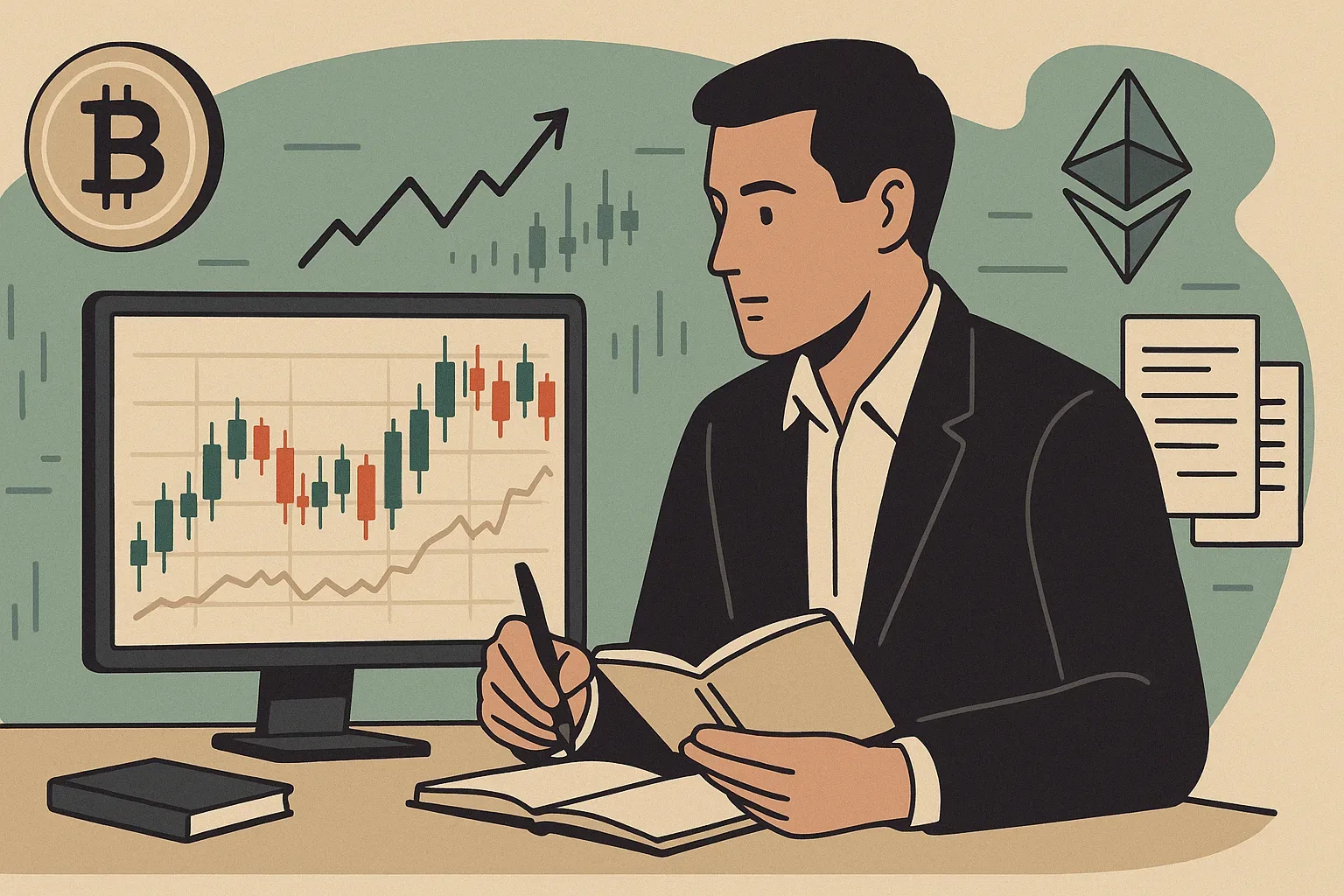
This information is educational and should not be considered financial, investment, legal, or tax advice. The crypto market is inherently volatile, and you can lose money.
Understanding Crypto Trading: What It Is and Why It Matters
Crypto trading involves the buying and selling of digital assets like Bitcoin, Ethereum, and countless altcoins on various exchanges. The primary goal is to profit from the price fluctuations of these assets. Unlike traditional stock or commodity markets, cryptocurrency markets operate 24 hours a day, seven days a week, reflecting their global and decentralized nature. This constant activity presents both significant opportunities and heightened risks.
What is crypto trading and how does it differ from traditional market trading?
If a trader believes an asset's price will rise, they buy it (go long); if they believe it will fall, they sell it (go short, often through derivatives). The market's dynamism is driven by supply and demand, technological developments, regulatory news, and overall market sentiment.
Firstly, accessibility: crypto markets are open to anyone with an internet connection, often without the stringent KYC (Know Your Customer) requirements found in traditional finance, though regulated exchanges increasingly enforce these. Secondly, volatility: cryptocurrencies, especially newer or smaller market cap assets, exhibit much higher price swings than established stocks or bonds. This can lead to rapid gains but also substantial losses. Thirdly, decentralization: while many traders use centralized exchanges (CEXs) that resemble traditional brokerages, a significant portion of the crypto ecosystem operates on decentralized exchanges (DEXs), where users trade directly from their non-custodial wallets without intermediaries. This contrasts sharply with the heavily regulated, centralized structure of traditional financial markets. Fourthly, market hours: traditional markets have fixed opening and closing times, whereas crypto markets are truly global and never close, which can be both an advantage for quick reactions to news and a challenge for continuous monitoring. Finally, the underlying technology: cryptocurrencies are built on blockchain technology, which introduces unique factors like network congestion, gas fees, and smart contract risks that are absent in traditional assets.
It provides individuals with unprecedented control over their assets (in decentralized contexts) and fosters innovation in financial instruments and services.
Key Concepts Every Crypto Trader Must Know
Navigating the crypto market requires a solid understanding of fundamental terminology and concepts. Mastering these is crucial before engaging in any trading activity.
What are the essential concepts and terminology used in cryptocurrency trading?
Central to crypto trading is the cryptocurrency itself, a digital asset designed to work as a medium of exchange using strong cryptography to secure financial transactions, control the creation of additional units, and verify the transfer of assets. These operate on a blockchain, a distributed, immutable ledger. Fiat currency refers to government-issued currency not backed by a physical commodity, such as the US Dollar (USD) or Euro (EUR).
A crypto exchange is a platform where you can buy, sell, or trade cryptocurrencies. These can be Centralized Exchanges (CEXs) like Binance or Coinbase, which act as intermediaries, or Decentralized Exchanges (DEXs) like Uniswap or SushiSwap, which facilitate peer-to-peer trading directly on the blockchain. A wallet is a digital tool used to store, send, and receive cryptocurrencies. Wallets can be hot (connected to the internet, less secure for large amounts) or cold (offline, like hardware wallets, more secure).
Trading pairs are the assets traded against each other, such as BTC/USD (Bitcoin against US Dollar) or ETH/BTC (Ethereum against Bitcoin). A take-profit order automatically sells an asset when it reaches a target price to lock in gains.
Liquidity refers to how easily an asset can be converted into cash without significantly affecting its price. High liquidity means trades can be executed quickly without large price impacts. Market capitalization (market cap) is the total value of all coins in circulation for a cryptocurrency, calculated by multiplying the current price by the circulating supply.
Exploring Different Types of Crypto Trading
The diverse nature of the crypto market has given rise to numerous trading styles and strategies, each suited to different risk appetites, time horizons, and capital sizes.
You own the underlying asset directly, aiming to profit from its price appreciation. This is ideal for beginners and those seeking long term exposure.
Margin Trading allows traders to borrow funds from an exchange to amplify their buying or selling power. Leverage is the ratio of borrowed funds to your own capital.
Futures Trading involves contracts to buy or sell a cryptocurrency at a specified price on a future date. Traders don't own the underlying asset but speculate on its future price. Futures contracts can be used for hedging or for speculating on both rising and falling prices.
Options Trading provides the buyer with the right, but not the obligation, to buy (call option) or sell (put option) a cryptocurrency at a specified price before or on a certain date.
Beyond these instruments, trading can be categorized by time horizon:
Scalpers require quick decision-making, advanced charting tools, and high liquidity.
Day Trading involves opening and closing all positions within a single trading day to avoid overnight risk.
Swing Trading involves holding positions for several days or weeks to capture larger price swings. Swing traders typically look for trends or reversals using a combination of technical and fundamental analysis.
Position Trading is a long term strategy where traders hold assets for weeks, months, or even years, focusing on major trends and strong fundamental analysis.
Automated Trading or Bot Trading utilizes software programs to execute trades based on predefined rules and algorithms.
Essential Strategies for Crypto Trading Success
Successful crypto trading is rarely a matter of luck; it stems from disciplined execution of well-researched strategies combined with strong emotional control.
What are the most effective strategies and approaches for trading cryptocurrencies?
One of the most common approaches is Trend Following, where traders identify the prevailing direction of the market (uptrend, downtrend, or sideways) and place trades in line with that trend. The idea is that a trend, once established, is likely to continue. Traders use technical indicators like moving averages to confirm trends.
Range Trading is effective in sideways or consolidating markets where prices move within defined support (bottom) and resistance (top) levels.
Arbitrage involves exploiting small price differences for the same asset across different exchanges. For example, if Bitcoin is slightly cheaper on Exchange A than on Exchange B, an arbitrageur buys on A and immediately sells on B to capture the spread. This often requires sophisticated automated systems due to the speed at which these discrepancies are corrected.
News Trading capitalizes on market reactions to significant news events, such as regulatory announcements, project updates, partnerships, or macroeconomic data. Traders must be quick to react and understand how different news might impact asset prices. This strategy carries high risk due to the unpredictability of market reactions.
Dollar-Cost Averaging (DCA) is an investment strategy where an investor divides the total amount to be invested across periodic purchases of a target asset over a fixed period. This reduces the impact of volatility on the overall purchase price, as the investor buys more when prices are low and less when prices are high. While primarily an investing strategy, it can be adapted by traders to build positions over time.
Portfolio Diversification is a fundamental risk management strategy, but also a trading approach. By spreading investments across various cryptocurrencies, sectors (DeFi, NFTs, Layer 1s), or even different asset classes, traders reduce the impact of poor performance from any single asset. The goal is to balance risk and reward.
Crucially, all successful strategies are underpinned by a Trading Plan. This written plan outlines your entry and exit criteria, position sizing, risk-reward ratios, stop-loss levels, and profit targets for each trade. A well-defined plan helps remove emotion from trading decisions.
Fundamental and Technical Analysis for Cryptocurrency Markets
To make informed trading decisions, traders employ two primary analytical approaches: fundamental analysis (FA) and technical analysis (TA). While distinct, they are often used in conjunction to provide a holistic view of an asset's potential.
How can I perform fundamental and technical analysis for crypto assets?
Fundamental Analysis (FA) focuses on the intrinsic value of a cryptocurrency, assessing the underlying factors that can influence its long term price. For crypto assets, this involves: reviewing the project's whitepaper to understand its vision, technology, and problem-solving approach; examining the development team's experience, reputation, and track record; and evaluating the technology itself, including its innovation, scalability, security, and real-world use cases. Tokenomics are critical: understanding the token's supply schedule (total supply, circulating supply, emission rate), distribution model, utility within its ecosystem, and staking mechanisms provides insight into potential supply-demand dynamics.
Further FA involves monitoring community growth and engagement across social media platforms and forums, as a strong and active community often signifies a healthy project. Partnerships and adoption rates indicate real-world utility and integration. The regulatory landscape is also a significant fundamental factor, as evolving government policies can profoundly impact an asset's legality, accessibility, and investor confidence. Finally, market sentiment and broader macroeconomic factors (like inflation, interest rates, or global financial stability) can influence the overall crypto market and, consequently, individual asset prices.
Technical Analysis (TA) involves studying historical price charts and volume data to identify patterns and predict future price movements. It operates on the premise that all available information is already reflected in the price. Key TA elements include:
Price Charts: Candlestick charts are widely used, showing open, high, low, and close prices for a specific period. Understanding candlestick patterns can signal reversals or continuations.
Support and Resistance Levels: These are price levels where buying (support) or selling (resistance) pressure is historically strong enough to prevent the price from moving further in a certain direction.
Trend Lines and Channels: These lines connect a series of higher lows (uptrend) or lower highs (downtrend) to visualize the prevailing market direction. Channels add parallel lines to define boundaries of price movement.
Volume: Trading volume indicates the strength behind a price movement. High volume accompanying a price move suggests stronger conviction.
Technical Indicators: These mathematical calculations are based on price, volume, or open interest data. Popular indicators include: Moving Averages (MA), which smooth price data over time to identify trends; the Relative Strength Index (RSI), a momentum oscillator that measures the speed and change of price movements, indicating overbought or oversold conditions; the Moving Average Convergence Divergence (MACD), which reveals changes in the strength, direction, momentum, and duration of a trend; and Bollinger Bands, which measure market volatility and identify potential overbought or oversold areas.
Traders use these TA tools to identify potential entry and exit points, set stop-loss levels, and generally inform their short to medium-term trading decisions. Combining FA and TA allows for a more robust trading approach, using FA for long term conviction and TA for precise timing.
Mastering Risk Management in Crypto Trading
Given the inherent volatility of cryptocurrency markets, effective risk management is not merely a suggestion but an absolute necessity for long term survival and profitability. Without it, even the most promising strategies can lead to substantial capital depletion.
What are the best practices for managing risk and protecting capital in crypto trading?
The cornerstone of risk management is Position Sizing, which dictates how much capital you allocate to a single trade. A widely accepted rule is to risk only a small percentage (e.g., 1-2%) of your total trading capital on any single trade. This ensures that a few losing trades do not severely impair your overall portfolio.
Implementing Stop-Loss Orders is critical. A stop-loss is an order placed with a broker to sell a security when it reaches a certain price. It is designed to limit an investor's potential loss on a position. Setting a stop-loss at a predefined level below your entry price, based on your risk tolerance and technical analysis, helps protect capital by automatically exiting a losing trade before it escalates. Conversely, Take-Profit Orders are used to automatically close a position once a predetermined profit target is reached, securing gains and preventing profits from evaporating in a market reversal.
Diversification remains a potent risk management tool. Instead of concentrating all capital into one or two assets, spreading investments across a variety of cryptocurrencies, each with different use cases, market caps, or blockchain technologies, can mitigate the impact of adverse movements in any single asset. However, avoid over-diversification, which can dilute potential gains and make portfolio management unwieldy.
While leverage can amplify profits, it equally magnifies losses and increases the risk of liquidation. Traders should only use leverage judiciously, if at all, and always with tight stop-losses.
Understanding and Accepting Volatility is a psychological aspect of risk management. Crypto prices can swing dramatically. Traders must be prepared for drawdowns and avoid panicking during market corrections, sticking to their pre-defined trading plan. Capital Preservation should always be the priority; the goal is to survive to trade another day, not to hit a home run on every trade. This means prioritizing not losing money over chasing aggressive returns.
Developing strong Psychological Discipline helps to avoid emotional decisions driven by FOMO (Fear Of Missing Out) or FUD (Fear, Uncertainty, and Doubt). These emotions often lead to buying at market tops or selling at market bottoms. A disciplined approach follows a plan regardless of market sentiment.
Finally, ensuring the Security of Your Assets is a fundamental aspect of protecting capital. Use strong, unique passwords, enable two-factor authentication (2FA) on all exchange and wallet accounts, and consider using hardware wallets (cold storage) for significant holdings to protect against hacks and theft.
Choosing the Right Crypto Trading Platform and Tools
The choice of trading platform and tools significantly impacts a trader's efficiency, security, and ultimately, their success. A well-selected suite of resources can provide an edge, while poor choices can lead to frustration and financial loss.
What tools and platforms are necessary for engaging in crypto trading?
The primary interface for crypto trading is a Crypto Exchange. These platforms come in two main types: Centralized Exchanges (CEXs) like Binance, Coinbase, or Kraken, and Decentralized Exchanges (DEXs) such as Uniswap or PancakeSwap. When choosing a CEX, evaluate factors like security measures (e.g., cold storage, insurance funds, 2FA options), fee structures (trading fees, withdrawal fees), available liquidity for desired trading pairs, the range of supported assets, user interface intuitiveness, and the responsiveness of customer support. For assessing trading platforms, our methodology outlined at https://zeroplusfinance.com/articles/how-we-review-a-crypto-exchange provides a detailed framework for evaluating critical factors such as security, fees, liquidity, and supported assets. DEXs offer greater autonomy and often access to a wider range of nascent tokens, but typically come with higher gas fees and a more complex user experience.
Beyond exchanges, Wallets are essential for storing your cryptocurrencies. Options include hardware wallets (cold storage) like Ledger or Trezor for maximum security for long term holdings, and software wallets (hot storage) such as MetaMask or Trust Wallet for convenient access to dApps and smaller trading amounts. It is generally advisable to avoid keeping large sums of crypto directly on exchanges.
For analysis, Chart Analysis Tools are indispensable. Platforms like TradingView offer advanced charting capabilities, a wide array of technical indicators, and drawing tools necessary for technical analysis. These tools often integrate data from multiple exchanges.
Portfolio Trackers help you monitor your holdings, gains, and losses across different exchanges and wallets. Websites like CoinMarketCap, CoinGecko, or dedicated portfolio tracking apps allow you to input your transactions or connect API keys (for exchanges) to get an aggregated view of your crypto assets. Block explorers, such as Etherscan for Ethereum, are also useful for verifying on-chain transactions.
Staying informed is vital, so News Aggregators and Social Media platforms are important tools. Reputable crypto news sites, analytical platforms, and curated lists on platforms like X (formerly Twitter) or Reddit can provide real-time updates and sentiment analysis.
Finally, for compliance, Crypto Tax Software (e.g., Koinly, CoinTracker) is becoming increasingly necessary. These tools help import transaction data from various sources, calculate gains and losses, and generate tax reports, simplifying what can be a complex reporting process.
Common Mistakes and How to Avoid Them
Even experienced traders make mistakes, but recognizing and actively avoiding common pitfalls can significantly improve your chances of success in the crypto market.
One prevalent mistake is a Lack of a Trading Plan. Many individuals jump into trading based on tips or hype, without defined entry and exit points, risk limits, or profit targets. This leads to impulsive decisions. To avoid this, always develop a comprehensive trading plan before entering a trade and stick to it rigorously.
Emotional Trading is another major pitfall. Falling prey to FOMO (buying assets after significant pumps) or FUD (selling assets during corrections out of panic) often results in buying high and selling low. Cultivate emotional discipline by adhering to your trading plan and understanding that volatility is inherent to crypto markets.
Over-Leveraging in margin or futures trading can magnify losses rapidly, leading to quick liquidations. While tempting, excessive leverage can wipe out capital. Use leverage cautiously, if at all, and always with stringent risk management like tight stop-loss orders.
Ignoring Risk Management altogether, such as not setting stop-loss orders or taking oversized positions, is a recipe for disaster. Always define your maximum acceptable loss per trade and implement mechanisms to enforce it.
Poor or Insufficient Research often leads to trading based on hype rather than fundamental value or technical indicators. Before investing, conduct thorough due diligence using both fundamental and technical analysis. Understand the project, its technology, team, tokenomics, and market context.
Chasing Pumps and Buying at All-Time Highs (ATHs) without proper analysis is a common mistake for new traders. While assets can continue to rise, buying at the peak of a parabolic move exposes you to immediate and significant downside risk. Wait for consolidations or pullbacks, or seek assets with strong fundamentals that have not yet experienced massive pumps.
Not Securing Assets Properly leaves your capital vulnerable. Leaving large amounts of cryptocurrency on exchanges, especially those without robust security records, or using weak, reused passwords and neglecting 2FA are critical errors. Prioritize moving significant holdings to cold storage and practicing robust cybersecurity hygiene.
Ignoring Market Cycles can lead to significant losses. Crypto markets move in cycles (bull and bear markets), each requiring different strategies. Trying to apply bull market strategies during a bear market, or vice-versa, can be detrimental. Understand the current market cycle and adapt your approach accordingly.
A Lack of Continuous Learning and Adaptation can cause traders to fall behind. The crypto space evolves rapidly with new technologies, regulations, and market dynamics. Staying informed and being willing to adapt your strategies is essential.
Finally, Misunderstanding Tax Implications can lead to legal and financial penalties. Every trade, swap, or even spending crypto can trigger a taxable event. Keep meticulous records and consult tax professionals or use crypto tax software to ensure compliance.
This article is educational and is not financial, investment, legal, or tax advice. On-chain products can lose value through market moves, smart-contract failure, and operational error. Cryptocurrency markets are volatile.